A New Chapter for India — The Promise of Rahul Gandhi’s Leadership
10 Jun 2026, 05:15 PM
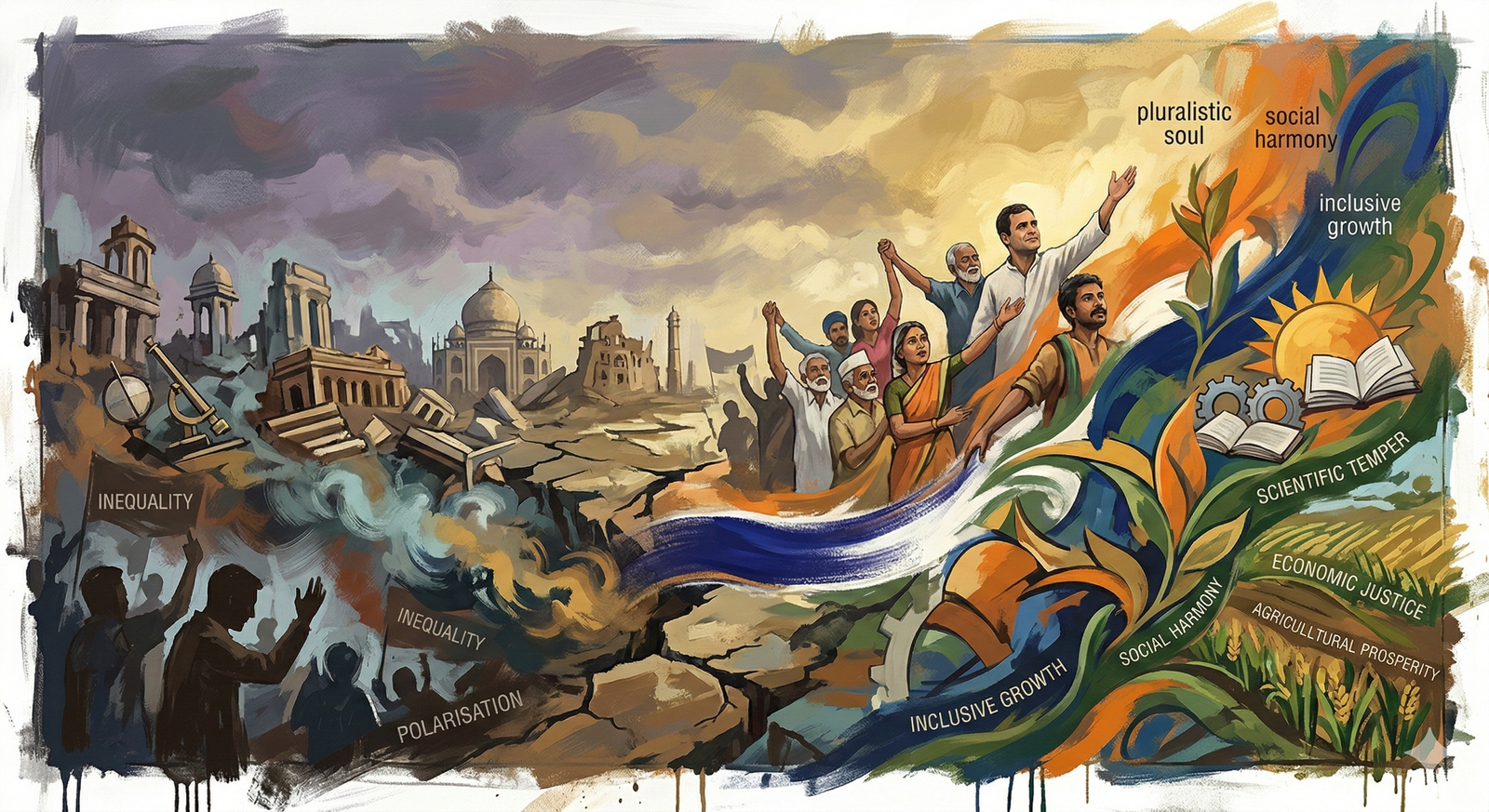
India stands at a decisive crossroads. The nation that once inspired the world with its pluralism, scientific temper, and inclusive growth is today facing deep social and economic anxieties. Rising inequality, widening social divisions, and the erosion of institutional balance have created a sense of uncertainty about the country’s direction. In this climate, the possibility of Rahul Gandhi emerging as India’s next Prime Minister represents not just a political shift, but a moral and democratic renewal.
Over the past decade, governance has increasingly been marked by centralisation of power and the amplification of identity-based narratives. The spirit of constitutional secularism—once India’s moral backbone—appears strained. Policies and public discourse have often deepened social polarisation rather than building consensus. Many citizens, particularly minorities, feel insecure about their place in the national fabric. A democracy thrives when every voice feels protected; when fear replaces confidence, the idea of India itself weakens.
Economic realities further underline the urgency for change. Despite headline growth figures, wealth concentration has reached unprecedented levels. A small segment of society has accumulated vast resources while large sections struggle with unemployment and rising costs of living. Young Indians, full of talent and aspiration, face a shrinking horizon of meaningful employment opportunities. Job creation, once a central promise, remains the country’s most pressing challenge.
Equally concerning is the diminishing space for scientific thinking and rational discourse. A nation that gave the world pathbreaking contributions in science, mathematics, and philosophy cannot afford to drift toward anti-intellectualism. Progress demands investment in education, research, and innovation—not suspicion of them. The future belongs to societies that nurture inquiry, not those that suppress it.
In this environment, Rahul Gandhi’s political vision offers a contrasting framework—one rooted in inclusion, institutional respect, and participatory democracy. His emphasis on economic justice, social harmony, and youth empowerment resonates with the aspirations of millions who seek dignity and opportunity. His outreach across regions and communities reflects an attempt to rebuild trust in democratic dialogue rather than rely solely on electoral arithmetic.
Leadership today requires empathy as much as authority. It requires listening to farmers burdened by uncertainty, to workers navigating precarious livelihoods, and to young citizens searching for purpose. Rahul Gandhi’s political journey has increasingly reflected these engagements, projecting a model of leadership that values conversation over confrontation.
India’s global image—its “Brand India”—has historically rested on diversity, democratic vibrancy, and intellectual openness. When domestic divisions deepen, that global credibility inevitably suffers. A leadership committed to unity in diversity and to equitable development can restore both domestic confidence and international respect.
The question before India is not merely about a change of government; it is about reclaiming the republic’s foundational values. The promise of Rahul Gandhi’s leadership symbolizes hope for a more just, compassionate, and forward-looking India—an India that grows economically while remaining socially harmonious, that modernises without abandoning its pluralistic soul.
History often turns when nations choose dialogue over division and justice over dominance. India now has an opportunity to make such a choice again.